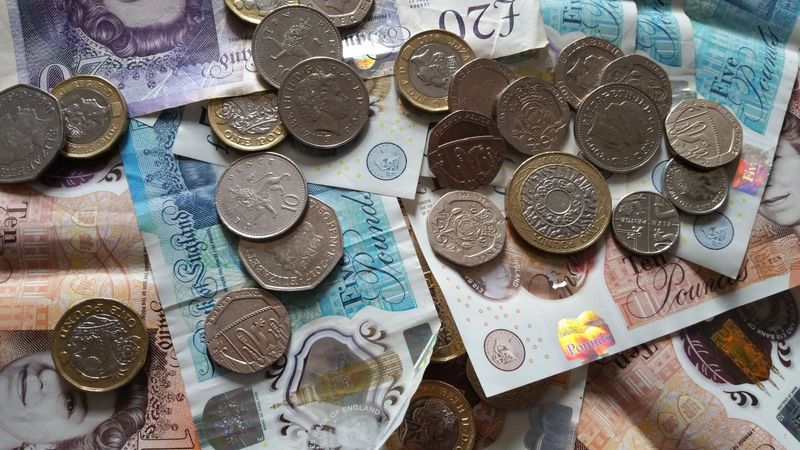
If you've started building up a savings pot, whether that's an emergency fund, money set aside for Christmas, or a deposit for your first home, you might be wondering whether you'll owe tax on the interest it earns. The good news is that most people in the UK can earn a decent amount of savings interest without paying a penny of tax on it, thanks to something called the Personal Savings Allowance.
This guide walks through how the Personal Savings Allowance fits into the wider UK tax system, why the amount you can earn tax-free depends on your Income Tax band, and what to do if you think your savings might be pushing you over the edge.
What Is the Personal Savings Allowance?
The Personal Savings Allowance is a tax-free allowance that sits alongside your regular Income Tax Personal Allowance. According to [GOV.UK](https://www.gov.uk/income-tax-rates), as well as your main tax-free Personal Allowance (currently £12,570), you also have separate tax-free allowances for things like savings interest and dividend income. This means you can earn interest on your savings, up to a certain amount, before HMRC expects you to pay any Income Tax on it.
Crucially, how much of that interest is tax-free depends on which Income Tax band you fall into. The system is designed on a sliding scale: the more you earn overall, and the higher your tax band, the smaller your tax-free allowance for savings interest tends to be.
How Income Tax Bands Work
To understand your Personal Savings Allowance, it helps to know which Income Tax band you're in. Based on the standard Personal Allowance, [GOV.UK's current bands](https://www.gov.uk/income-tax-rates) are:
- Personal Allowance: up to £12,570 (0% tax)
- Basic rate: £12,571 to £50,270 (20% tax)
- Higher rate: £50,271 to £125,140 (40% tax)
- Additional rate: over £125,140 (45% tax)
If you earn over £100,000, it's also worth knowing that your Personal Allowance starts to shrink, falling by £1 for every £2 your income is above that threshold, until it disappears entirely once you reach £125,140.
Because your Personal Savings Allowance is linked to these bands, basic rate taxpayers generally get a larger tax-free allowance for savings interest than higher rate taxpayers, and additional rate taxpayers typically see their allowance reduced significantly, if any is available at all.
A quick note on exact figures: the specific pound amounts attached to each band's Personal Savings Allowance can be reviewed and changed by the government, so rather than quoting a number here that might be out of date by the time you read it, it's worth checking the current figures directly on [GOV.UK's Income Tax rates and Personal Allowances page](https://www.gov.uk/income-tax-rates) or speaking to HMRC. Treat this post as a guide to how the system works, not a substitute for checking the live numbers.
Why Your Tax Band Matters More Than You Might Think
It's easy to assume that if you're not a high earner, savings interest tax doesn't apply to you at all. But a few things can catch people out:
- Interest rates rising can mean your savings earn more than they used to, even if your balance hasn't changed much.
- A pay rise or bonus could nudge you into a higher Income Tax band, which may reduce the amount of savings interest you can earn tax-free.
- Combining accounts across several banks or building societies can add up to more total interest than you realise, since all your savings interest (outside of ISAs) usually counts towards your allowance, not just the interest from one account.
If you're self-employed, in a mix of employment and self-employment, or juggling multiple income sources, it's worth checking your Income Tax position regularly rather than assuming it stays the same year to year. You can do this through your personal tax account on GOV.UK, or by speaking directly with HMRC if anything feels unclear.
Where ISAs Fit Into the Picture
If you want to take the guesswork out of savings interest and tax altogether, an Individual Savings Account (ISA) is worth considering. According to [GOV.UK](https://www.gov.uk/individual-savings-accounts), you can save tax-free using an ISA, and in the current tax year the maximum you can put into ISAs is £20,000.
There are four main types of ISA:
- Cash ISA: works much like a regular savings account, but the interest is tax-free
- Stocks and shares ISA: for investing, with any growth or income tax-free within the wrapper
- Innovative finance ISA: for peer-to-peer lending style investments
- Lifetime ISA: aimed at first-time buyers or long-term retirement saving, with its own rules and age limits
Because interest earned within an ISA doesn't use up your Personal Savings Allowance, it can be a useful way to protect larger savings pots from tax, particularly if you're a higher or additional rate taxpayer whose allowance for interest outside an ISA may be smaller. If you're trying to decide between different ISA types for a specific goal, our guide on [Help to Buy ISA vs Lifetime ISA](#) walks through how those two compare for first-time buyers.
It's worth remembering that ISAs are a savings and investment product, not just a tax rule, so if you're considering a stocks and shares ISA or moving existing savings around, it's sensible to think about your own circumstances and risk appetite, and consider speaking to a regulated financial adviser or a free service like [MoneyHelper](https://www.moneyhelper.org.uk) if you're unsure what's right for you.
Practical Steps to Make the Most of Your Allowance
You don't need to be a tax expert to manage this sensibly. Here are some practical, low-stress ways to stay on top of it:
1. Know your Income Tax band
Check your payslip, P60, or personal tax account to see roughly where your income sits within the bands on [GOV.UK](https://www.gov.uk/income-tax-rates). If your income is close to a band threshold, it's worth keeping an eye on this, especially if you're expecting a pay rise, bonus, or a change in work pattern.
2. Keep track of interest across all your accounts
If you have savings spread across several banks, building societies, or savings apps, make a simple list (even a basic spreadsheet or note works) of how much interest each one is paying and roughly how much you're earning per year. This makes it much easier to spot if your total interest might be creeping towards or past your allowance.
3. Use ISAs for larger savings pots
If you're building up a bigger emergency fund or saving towards a long-term goal, putting some or all of it into a cash ISA can help protect the interest from tax, since it sits outside your Personal Savings Allowance entirely. If you're new to the idea of ISAs generally, our budgeting and saving guides are a good next step before diving into the details of ISA products.
4. Don't panic if you think you've gone over
If your savings interest does end up exceeding your allowance, HMRC usually collects any tax owed automatically, often by adjusting your tax code, so in many cases you won't need to do anything extra. If your situation is more complicated (for example, you're self-employed or your income varies a lot), it's worth checking with HMRC directly or getting free guidance from [MoneyHelper](https://www.moneyhelper.org.uk), rather than guessing.
5. Review things annually
Tax rules, allowances and bands can be adjusted from one tax year to the next. Make it a habit to check your Income Tax band and savings allowance each April, alongside reviewing your budget and savings goals for the year ahead.
Bringing It All Together
The Personal Savings Allowance is one of those quietly useful parts of the UK tax system that rewards people for building up savings, without requiring you to do anything complicated. The amount you can earn tax-free is tied to your Income Tax band, which means it's worth knowing roughly where you sit, particularly if your income or savings interest has grown recently.
For many people, a mix of ordinary savings accounts (covered by the allowance) and an ISA (tax-free regardless of your band) offers a sensible way to grow savings without worrying too much about tax along the way. If you're ever unsure exactly where you stand, especially if your income is close to a tax band threshold or you have more complex finances, free and impartial help is available through [MoneyHelper](https://www.moneyhelper.org.uk) or Citizens Advice, and a regulated financial adviser can help if you're weighing up bigger decisions about where to put your money.
Understanding how your Personal Savings Allowance works is a small piece of the bigger budgeting puzzle. If you haven't already, it's worth pairing this with a look at our other Genwel guides on building a savings habit and getting your monthly budget in order, so your money works as hard as possible for you, tax-free interest included.